
Rehab cost estimator • Repair budget • South Jersey investor guide
How to Estimate Rehab Costs for Real Estate Deals (South Jersey Guide)
A conservative, investor-grade framework to avoid underestimating repairs and overpaying.
Rehab costs are the #1 reason deals look great on paper but fail in real life. This guide helps you estimate repair budgets using a simple category-based approach (plus buffers) so you can plug cleaner inputs into your real estate deal analyzer and make a clear PASS / WATCH / MOVE decision before you submit an offer.
Quick Start: Estimate repairs by category → add a 10–15% buffer → then run MAO and profit/cash flow. If the deal only works with best-case rehab numbers, treat it as WATCH or PASS.
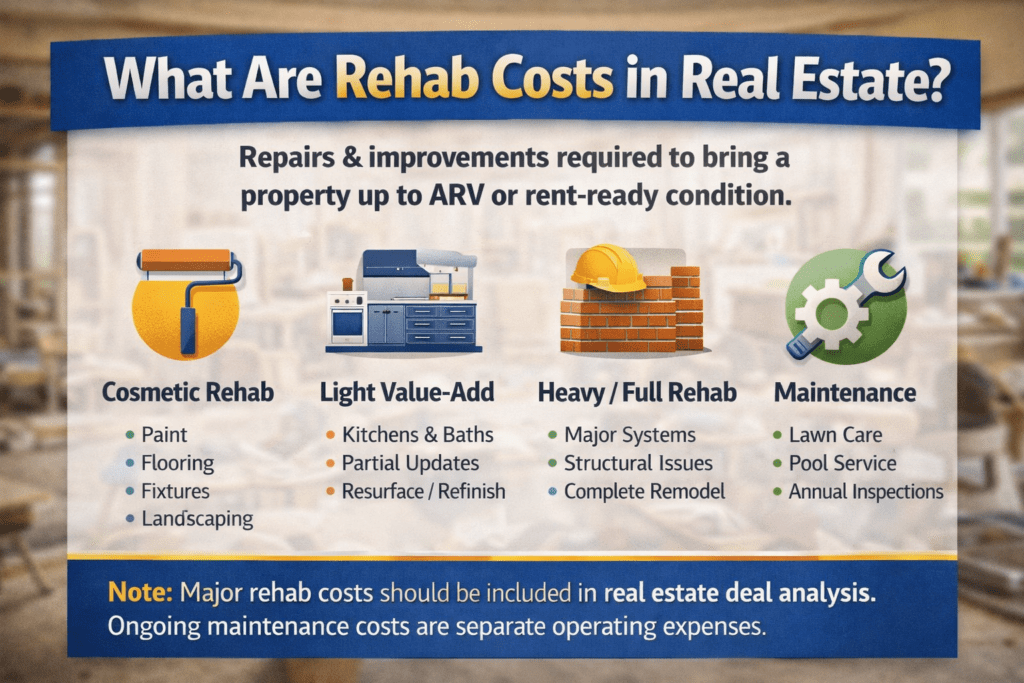
What Are Rehab Costs in Real Estate?
Rehab costs are the total expenses required to bring a property to its intended condition—whether that’s resale-ready for a flip or rent-ready for a long-term rental. In a professional real estate deal analyzer, rehab costs are one of the most critical inputs because they directly impact your Maximum Allowable Offer (MAO), profit margin, and cash flow.
Rehab is more than cosmetic work. Investors who underestimate repairs often overpay at acquisition and lose margin before the project even starts. Conservative rehab estimates protect capital and reduce downside risk.
In South Jersey markets—especially with older housing stock—accurate rehab estimation is essential when analyzing off-market deals, foreclosures, and properties with limited interior access.
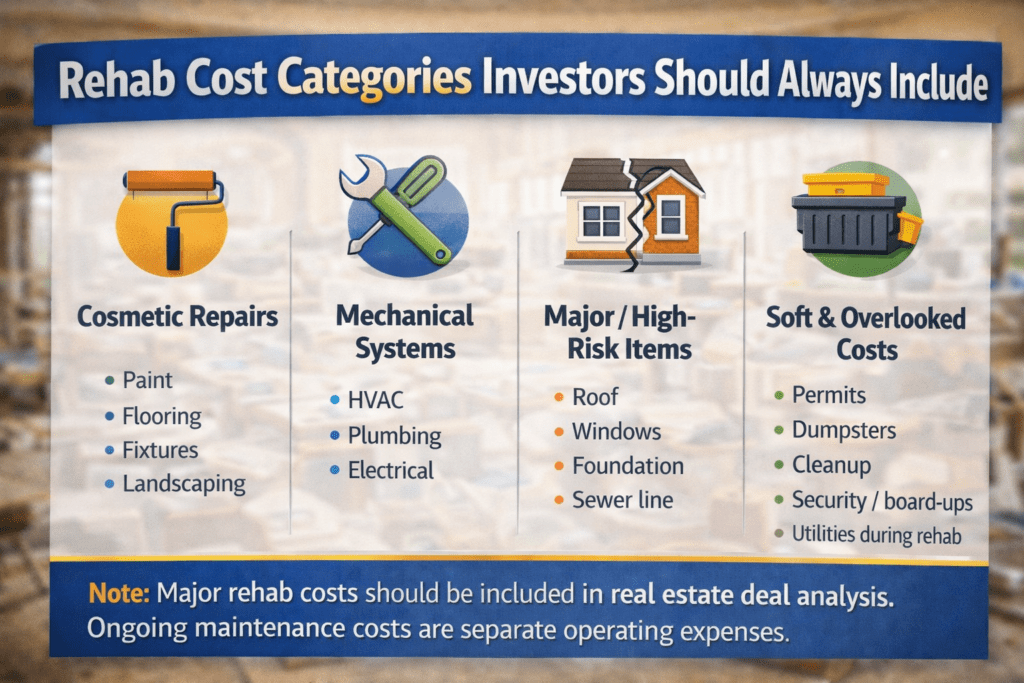
Rehab Cost Categories (Use This Checklist)
A rehab estimate is only “accurate” if it’s organized. The fastest way investors miss money is by lumping repairs into one number without breaking the scope into categories.
Use the categories below to build a conservative rehab estimate before you run MAO in your real estate deal analyzer.
Category 1: Cosmetic & Curb Appeal
- Paint, flooring, trim, doors
- Fixtures, appliances, lighting
- Landscaping, debris removal, exterior cleanup
Category 2: Kitchens & Baths
- Cabinets, counters, tile, vanities
- Plumbing fixtures, tubs/showers, ventilation
Category 3: Mechanical Systems (Big Risk)
- HVAC (furnace/AC), ductwork
- Electrical panel, wiring, outlets
- Plumbing lines, water heater, sewer line risk
Category 4: Major Items (Deal Killers)
- Roof, windows, siding
- Foundation, structural, water intrusion
- Mold remediation, termite / damage repair
Category 5: Soft Costs & Overlooked Costs
- Permits, inspections, dumpsters
- Utilities turn-on, winterization, lock changes
- Cleaning, punch list, staging (optional)
Pro tip: If interior access is limited, assume heavier repairs and add a 10–15% contingency buffer before trusting your numbers. If the deal only works without a buffer, treat it as a WATCH or PASS.
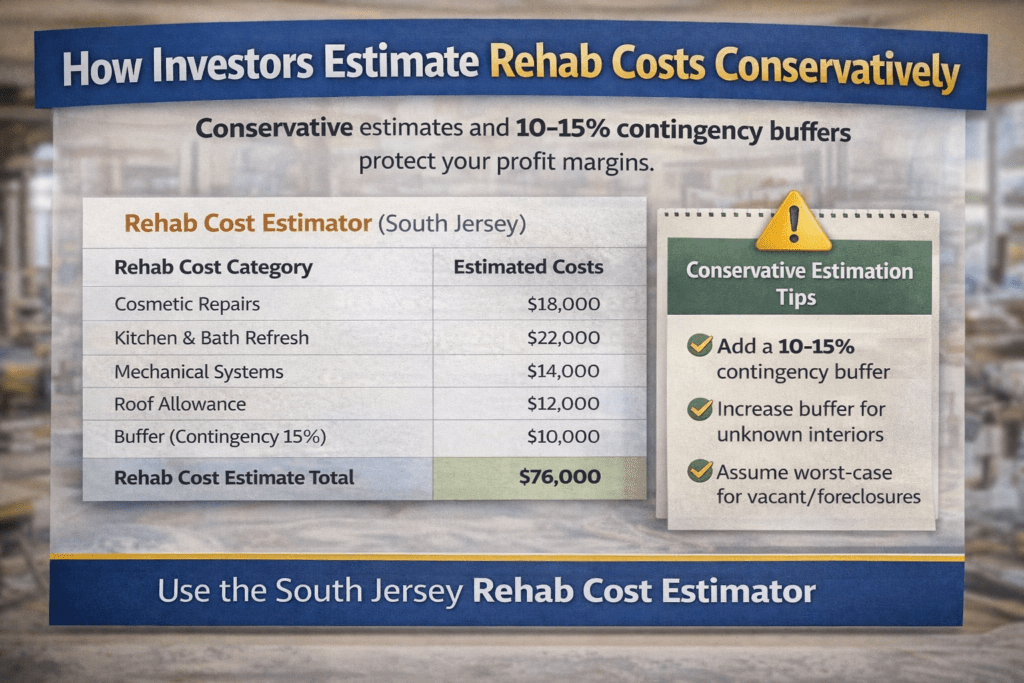
How to Estimate Rehab Costs (Without Getting Burned)
Rehab cost estimation is where most deals quietly fall apart. The goal isn’t to “guess a number” — it’s to build a conservative budget that holds up even if the timeline slips or hidden issues show up. This is why serious investors use a real estate deal analyzer and a category-based rehab estimator.
Start With Categories (Not a Single Guess)
Break the rehab into line items so nothing gets missed. Your rehab estimate should include: cosmetic work, mechanicals, major systems, and exterior. If you can’t see the inside, assume heavier work — not lighter.
Add a Contingency Buffer (Always)
Even good contractors find surprises. A simple rule: add a 10–15% contingency for normal projects — and 15–25% when interior access is limited, the property is older, or utilities are off.
Use Conservative Inputs to Protect MAO
Your rehab number directly impacts your Maximum Allowable Offer (MAO). If your repairs come in higher than expected, your MAO should come down — not your profit target. Investors who protect MAO first avoid thin deals and expensive lessons.
Pro tip: Run your rehab estimate twice — (1) realistic and (2) stress-tested (+15% rehab). If the deal only works on best-case rehab, treat it as a WATCH or PASS.

How to Estimate Rehab Costs (Without Getting Burned)
Rehab costs are where most “good deals” quietly fall apart — not because the strategy is wrong, but because the rehab number was guessed, rushed, or missing major items. A professional real estate deal analyzer is only as accurate as your rehab estimate.
The goal is not to pick one magic number. The goal is to estimate rehab costs in categories, add a contingency buffer, and use conservative assumptions so your MAO and profit targets stay realistic.
A simple rehab estimating rule:
Build your rehab estimate from line items (cosmetic + mechanical + major items + “soft costs”), then add a 10–15% contingency. If the property is older, utilities are off, or interior access is limited, consider 15–25%.
Rehab Estimating Checklist (Fast)
- Cosmetic: paint, flooring, fixtures, landscaping, minor drywall
- Mechanical: HVAC, plumbing, electrical, water heater
- Major items: roof, windows, foundation, sewer line, structural repairs
- Soft costs: dumpster, permits, inspections, clean-out, punch-list items
- Contingency: 10–15% (or higher when unknowns are present)
Once you estimate rehab costs conservatively, your next step is to plug that number into your Maximum Allowable Offer (MAO) so you can make a clear PASS / WATCH / MOVE decision.
Recommended tool: Use the Rehab Cost Estimator to build a line-item rehab number you can trust.